The easy part is building it. The hard part starts after it works.
I’m Alexander Titus. I’ve spent more than a decade building and governing AI and biotech, and written five novels about where they lead. One question runs through all of it: once we can change almost anything, who gets to decide what we become?
It’s all one question.
What happens once the technology actually works? Capability is getting cheaper, faster, and more widely distributed. Consequence, governance, and what we choose to become are the whole game. I chase that question wherever it lives. It looks like four different careers. It’s one.
The first enterprise AI organization at a clinical-stage biotech. The Pentagon’s first biotechnology strategy.
The record Govern itA Congressional commissioner on emerging biotech. A National Academies study. Testimony to the Senate.
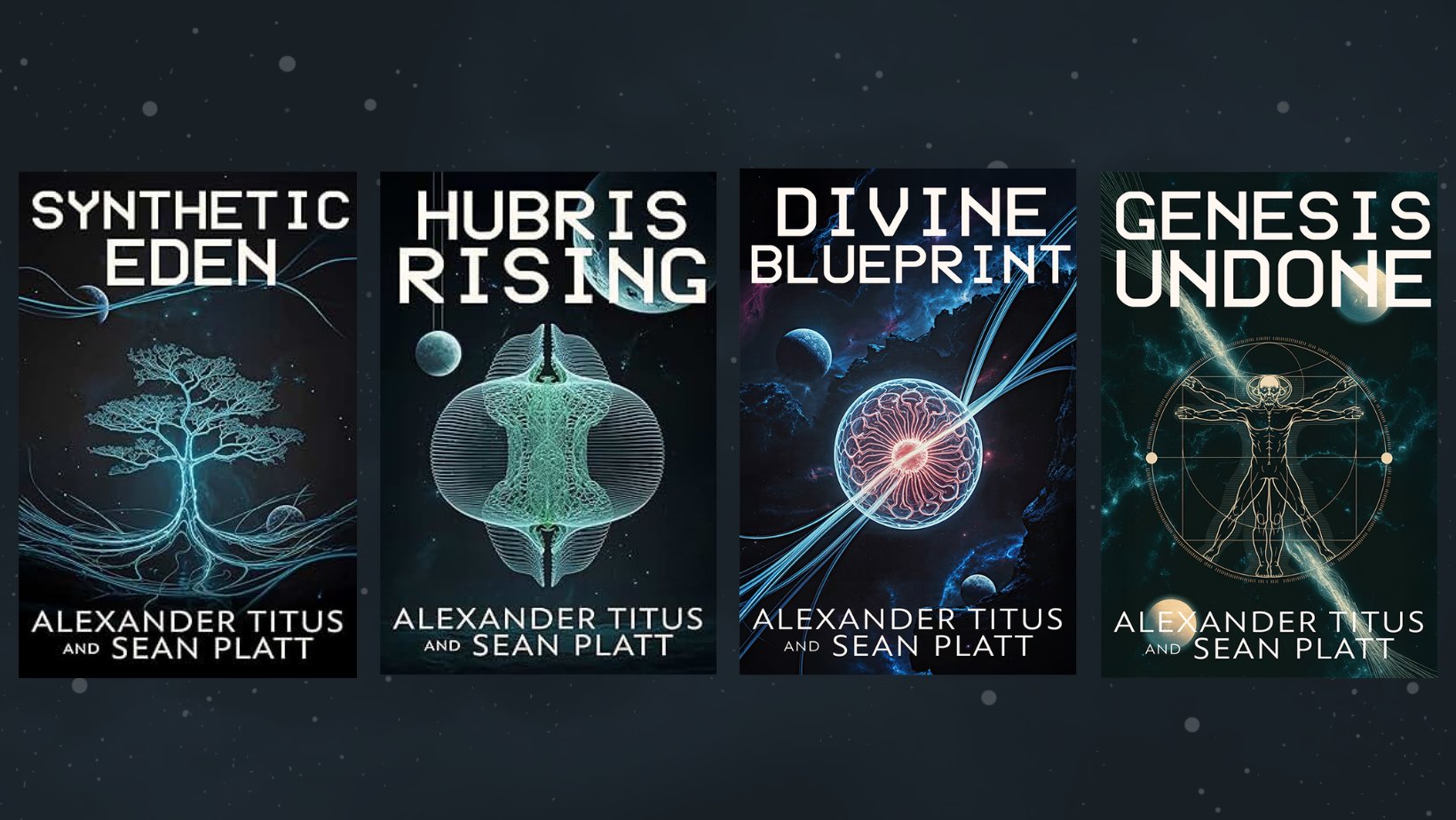
The record Write itTwo universes of science fiction that run the experiments reality is too small to test.
The writing Live itA few thousand miles by bike, because an idea has to survive contact with reality.
Outside the roomThis isn’t theoretical.

More than a decade building and governing AI and biotech from inside the institutions that decide what happens to them.
Founding CEO
Alloy Therapeutics, Vigilance Division
Building the division that aims Alloy's platform at the national security mission, from biotech competitiveness to health security.
Commissioner, appointed by Congress
Emerging Biotechnology (NSCEB)
Co-author of the national action plan for keeping the U.S. ahead in biotech.
VP, AI & Machine Learning
Avidity Biosciences
Built and led the first AI transformation initiative through our acquisition.
First head of biotech strategy
U.S. Department of Defense
Launched the first enterprise biotechnology strategy for the Pentagon.
We cannot prove an absence of risk, but we can build empirical ways to measure change over time.
Fiction is where I run the experiment.
Some questions get too big for an essay. A memo warns you about a future; a novel puts you inside it. With Sean Platt, I write the experiments reality is too small to run: the futures I’m trying to prevent, and a few I’m rooting for.
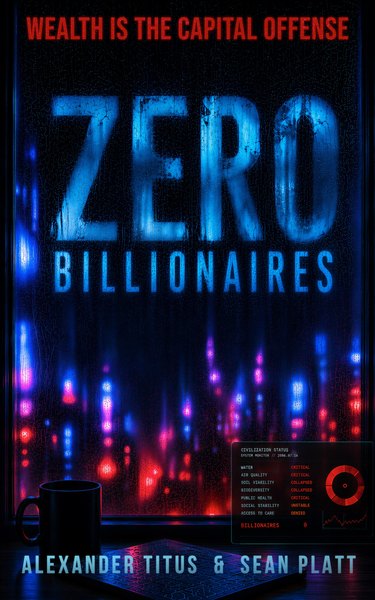
Zero Billionaires
Wealth is the capital offense.
What does it mean to have too much? A world that prices every human in real time, and the people who decide to end it.
Evil rarely comes with a cackling smile. Sometimes it comes in a spreadsheet.

Away from the desk I go looking for the edge of what I can do, on foot, on a bike, up high. Three thousand miles from Alaska to California in 2014, in tandem, among others. The reason is the same as the work: an idea has to survive contact with reality, and the limits other people accept are not yours to inherit.
Outside the room