NotesFictionEdition 74 min read
A Tool Has No Conscience
For a century we have argued about technology as if the only options were to worship it or to smash it. The finale says both are a way of refusing to grow up. On tools, weapons, and who you have to become to tell them apart, in the book that became Genesis Undone.
We keep having the same argument about every powerful new technology, and it keeps offering only two sides.
One side says the tool will save us. Get out of its way. Progress is a river and you are either in the boat or under it.
The other side says the tool will damn us. Ban it, break it, keep your hands clean, stay human by refusing to touch the thing that could make you something else.
Both sides get to feel righteous, and both are a way of not being responsible for the tool. The believer abdicates by trusting the machine to supply its own conscience. The rejecter abdicates by pretending you can keep the good of a capability while refusing to ever pick it up. Neither one has to do the actual work, which is unglamorous, and endless, and the only thing that has ever worked. You govern the thing. You decide what it is for. You watch whose hand is on it.
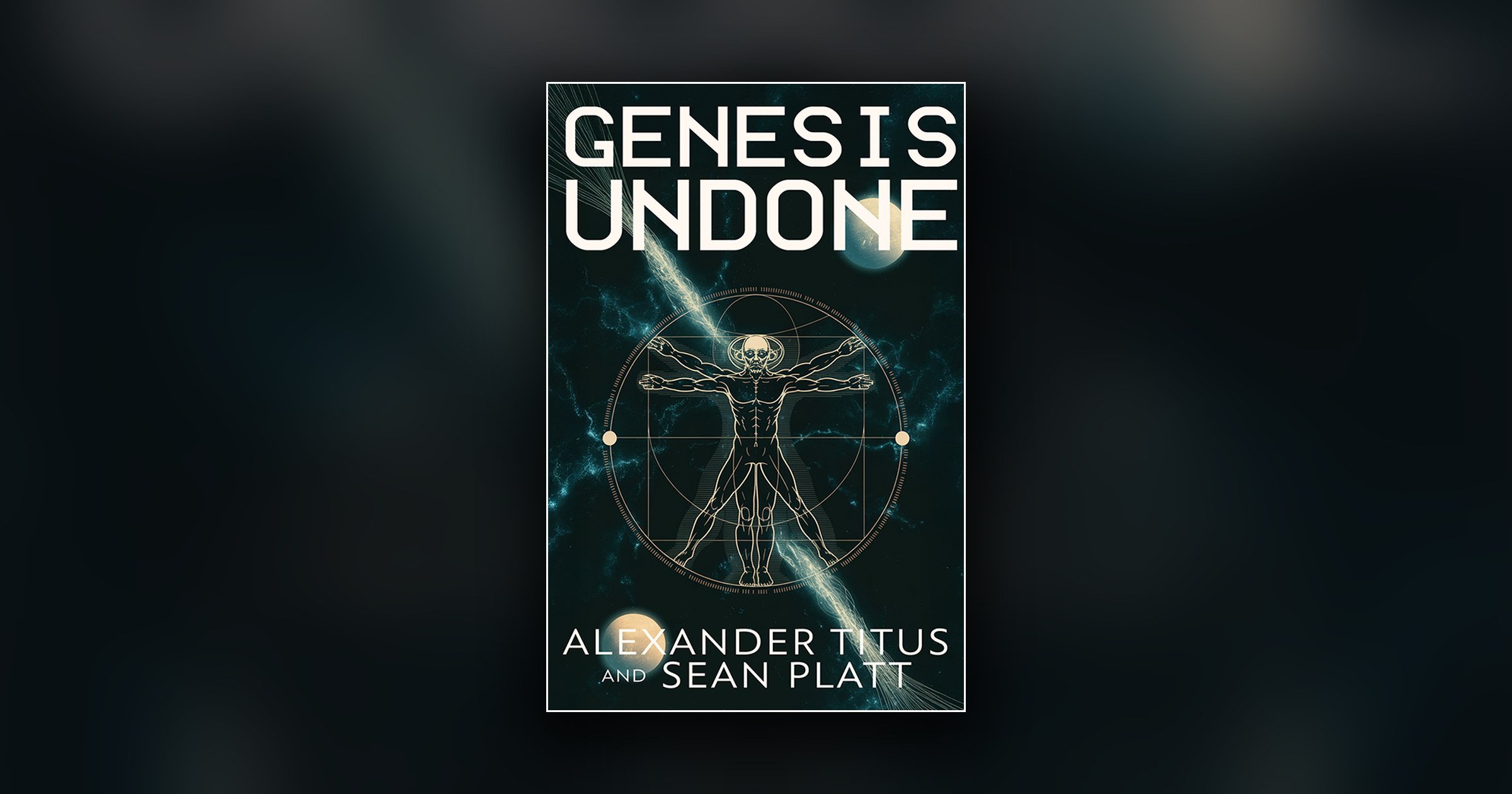
Genesis Undone is the last book in the series, and it is Sean’s and my argument that both of those clean, righteous positions are cowardice wearing different outfits.
The line the book keeps returning to is simple. A tool has no conscience. That is not a defect some future version will fix. It is the permanent condition of every tool there has ever been. The scalpel does not know whether it is opening a patient or a throat. The same edit that cures a disease can enhance a soldier. The same network that runs a city can run a mind. Intent is the only variable that matters, and intent cannot come from inside the machine. It has to be supplied from outside, by a person willing to put their name on it. A technology is not a weapon and it is not a gift. It is whatever the hand holding it decides, and the moment that hand stops being accountable is the moment the tool turns.
The finale gives you both of the easy answers as people, and lets you watch what each one costs.
There are the purists, who spent the whole series keeping their hands clean, and learn that clean hands bought them nothing but dependence on the people they looked down on and cruelty toward the people they feared. And there is the believer taken all the way to the end of his own logic, the one who says I am progress, roll with it or be crushed. Capability that has decided consequences are for smaller minds. He is the argument that the tool justifies itself, wearing a face, and the book follows that argument all the way to where it goes when nothing is allowed to check it.
Set against both of them is the question the whole series has been circling. If a person can forfeit everything that makes him human while staying biologically human the entire time, and something built in a factory can be the most decent presence in the room, then what is it that actually makes someone a person? The finale’s answer is the thing I believe most and can least prove. It is not what you are made of. It is not how smart you are, and it is not where you came from. It is whether, when everything in you wants to destroy the thing that hurt you, you can choose to let it live. Conscience is a choice, and the book stages that choice between exactly the beings we are most certain could never make it.
None of it resolves into a side winning. That is the part I am proudest of. The book does not crown science and it does not crown faith. It retires both of them as ideologies and reaches for something harder: the possibility that the forbidden thing does not have to be worshipped untouched or smashed to pieces, that it can instead be understood, taken responsibility for, and pointed at something worth doing. But only by people willing to get their hands dirty together, which is the one thing every faction in this world was built to refuse.
What the story is finally after is not the destruction of the dangerous technology. It is the far less cinematic work of learning to govern it. I have spent a good part of my working life in the rooms where people try to write those rules for exactly these kinds of tools, and I can tell you the version of the story where the heroes blow up the lab and go home is a fantasy. The lab is already built. The tools already work. What is left is the question this whole series turned out to be about. Not whether to use them. Who you have to become in order to use them well.
Genesis Undone is Book Four of Echoes of Tomorrow, by Alexander Titus and Sean Platt.